

This Is One Of Italy’s Most Affordable Destinations To Visit This Spring
A cheeky Aperol Spritz and carbonara pasta on a terrace overlooking that imposing Duomo, the winding cobbled lanes and beautiful pastel buildings that look like a movie set, and that glittery, azure Mediterranean to top it off:
Southern Italy is nothing short of the quintessential Mediterranean experience, and there’s nowhere we’d rather kick off our season of spring travels in. It’s not like England or Germany are known for their lovely weather this early in the year, after all.
There’s just one caveat:
A week of beach-hopping in the Amalfi Coast, or chasing sunsets in Capri, isn’t exactly merciful in regards to low-budget visitors: from sit-down meals and wine starting from $59, to limited-service hotels ranging from luxury-priced $236–$413 a night—sometimes that doesn’t even include breakfast!
The thing is, living la dolce vita doesn’t require splurging like you have millions in the bank: in the very south of Italy, at the inner curve of the boot, there’s a dreamy coastal getaway waiting to be discovered (and it won’t drain your wallet):
Is This One Of Italy’s Most Underrated Coastal Getaways?
Puglia is already a pretty off-path destination for most Americans traveling around Italy, though that won’t be the case for long.
Known for its whitewashed towns, with medieval houses perched on coastal cliffs, and its unique gastronomy, it’s headed for a big popularity surge in 2026 with the new direct flights from JFK to Bari.
Bari is the capital city of Puglia and a bustling port, a stone’s throw away from many of the region’s most famous attractions, such as the Polignano a Mare beach and the iconic trulli of Alberobello.
However, something most tourists have blissfully ignored up until now is that Bari is also a short, 1-hour direct train ride to one of the most culturally significant destinations in all of Italy: Taranto, or, as the Greeks called it in Ancient Times, Taras.
Taranto was founded by none less than the Spartans—as in, King Leonidas 300 Spartans—all the way back in the 8th century BC, when the area was not yet Italian in culture, but Greek.
The Greeks colonized much of Southern Italy, from the regions we know as Calabria and Campania (which includes Amalfi), all the way to Sicily. They named their Italian territories ‘Magna Graecia’, and if you’re wondering, yes, this was prior to Rome’s rise to power.
Needless to say, Taranto is pretty much a History buff’s playground:
Greeks In Southern Italy?
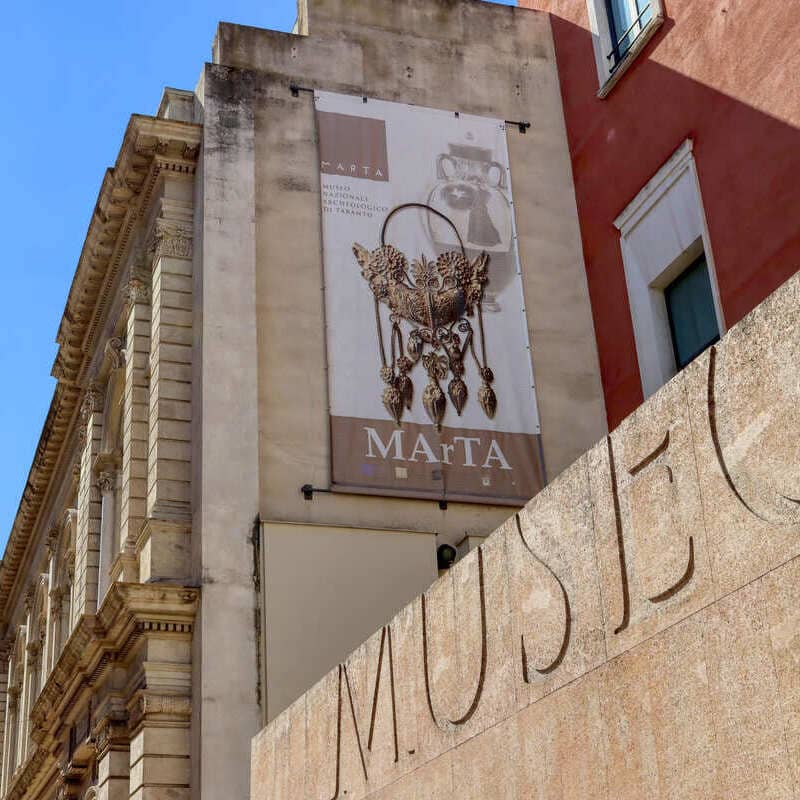
For starters, it is home to the seriously impressive Museo Archeologico Nazionale di Taranto (MArTA), a vast archaeological exhibit featuring stunning Greek gold jewelry, perfectly preserved from millennia ago, Spartan artifacts, ornate ceramics, and even tomb finds from Magna Graecia.
If you only have time to see one thing in Taranto, make sure is this one.
Sadly, not that many monuments from the Hellenic period have survived intact, and those that are found still to this day end up in the museum, so it is truly your best bet at soaking up the city’s Greek past.
MArTA’s entry fee is only €10 (roughly $12), and unlike your average major Italian museum, this one usually has no queues at the door, nor do you need to book your slot months in advance.
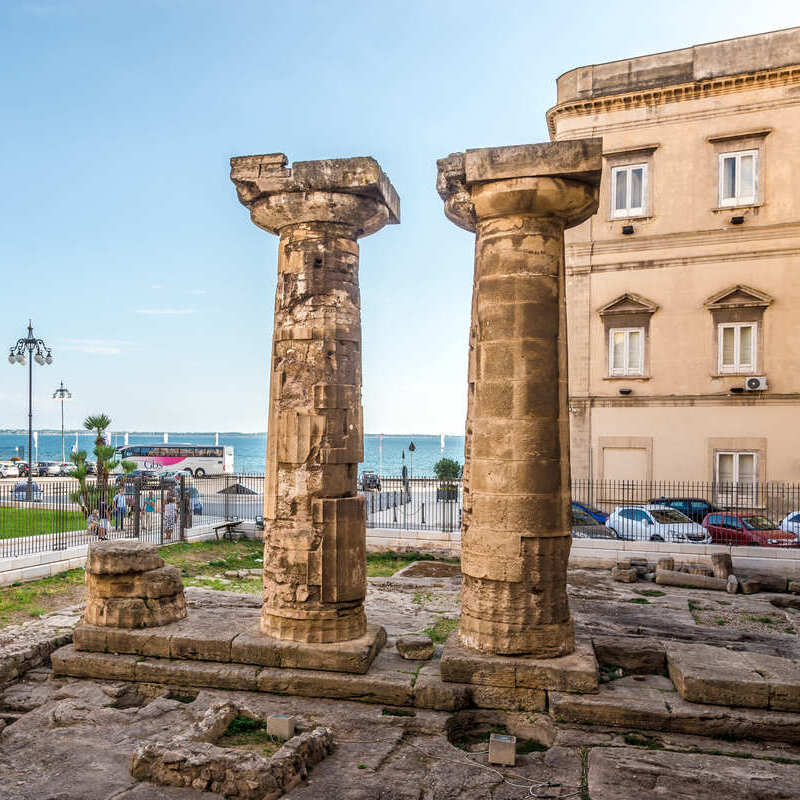
Now, that’s not all that there is to see in Taranto: right in the heart of the Historic City, the Temple of Poseidon is a (mostly-ruined) Doric temple from the 6th century BC, of which only 6 columns have stood the test of the time.
They’re the oldest visible remains in the city, and are just lying there, surrounded by far-more modern buildings. It’s surely no Temple of Concordia, mind you, but it has none of the Sicilian temple’s 3 pm crowds, and the contrast between old columns and modern buildings is quite cool.
An Ancient Town On A Historic Isle
Now, I love me an old Italian city that’s set on an island.
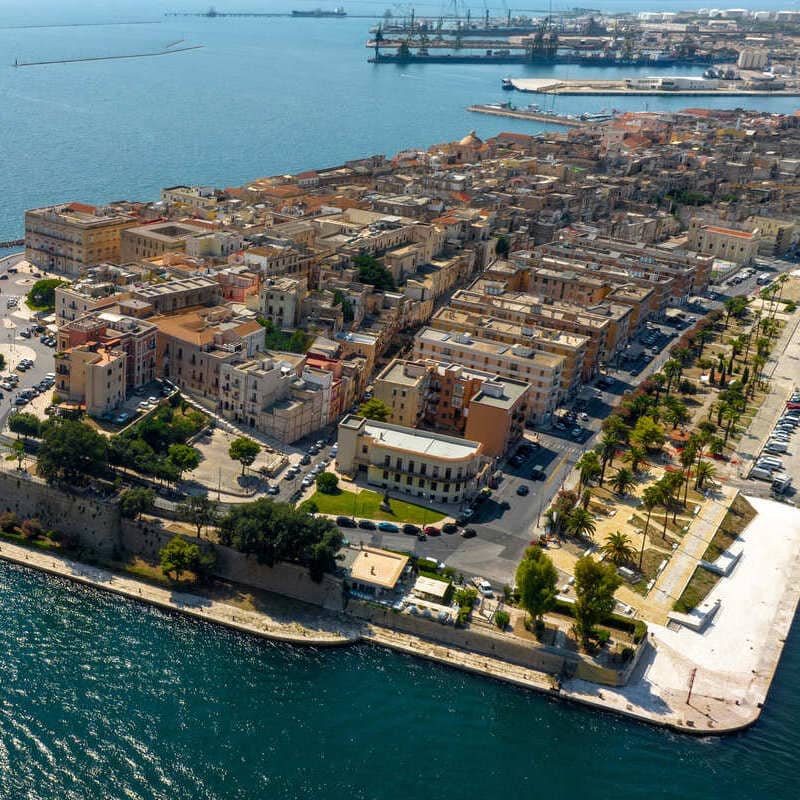
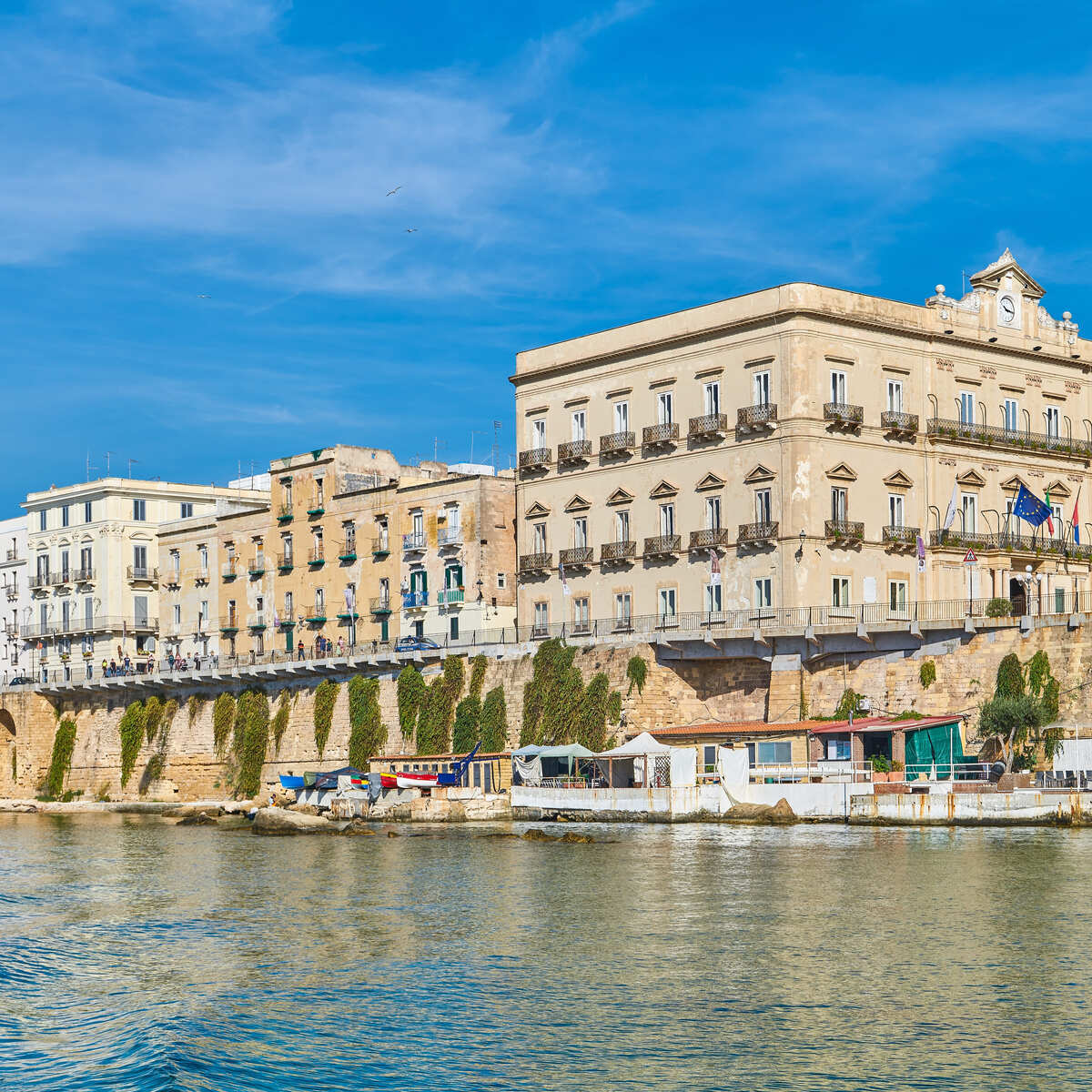
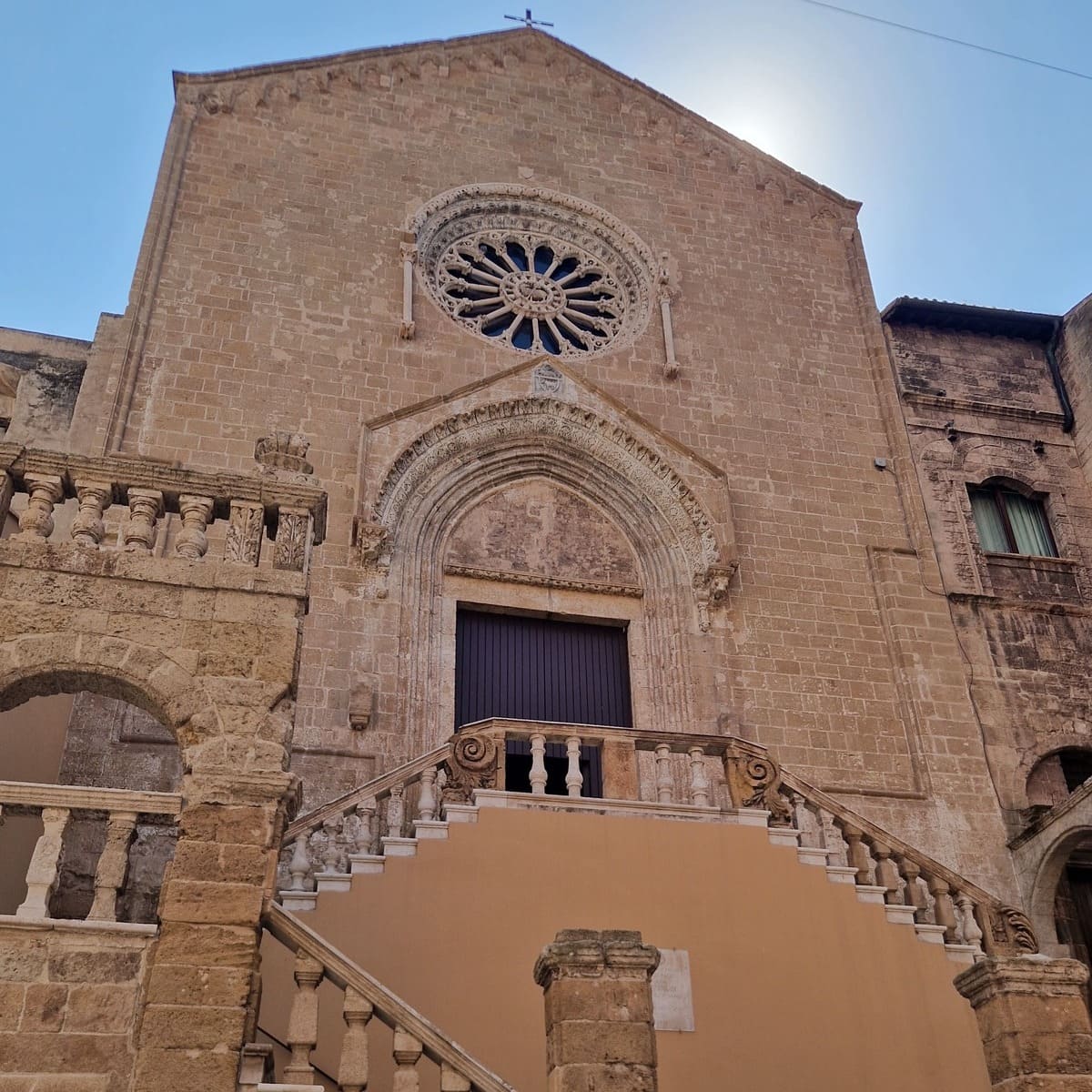
Taranto’s Città Vecchia (Italian for Old Town), was also built on one, much like its Magna Graecia-sister Syracuse, and the winding cobbled lanes carry Greek street layout traces, Roman foundations and paving, and architectural contributions of many a civilization that has risen and fallen.
Unlike your average Italian city, however, walking around Taranto feels far more atmospheric somehow.
The pastel on the building walls doesn’t exactly look freshly-painted—for the most part, there aren’t even bright, Instagrammable colors at all, just bare, aged, medieval stone—and the vibe is authentic, not polished, almost stubbornly so.
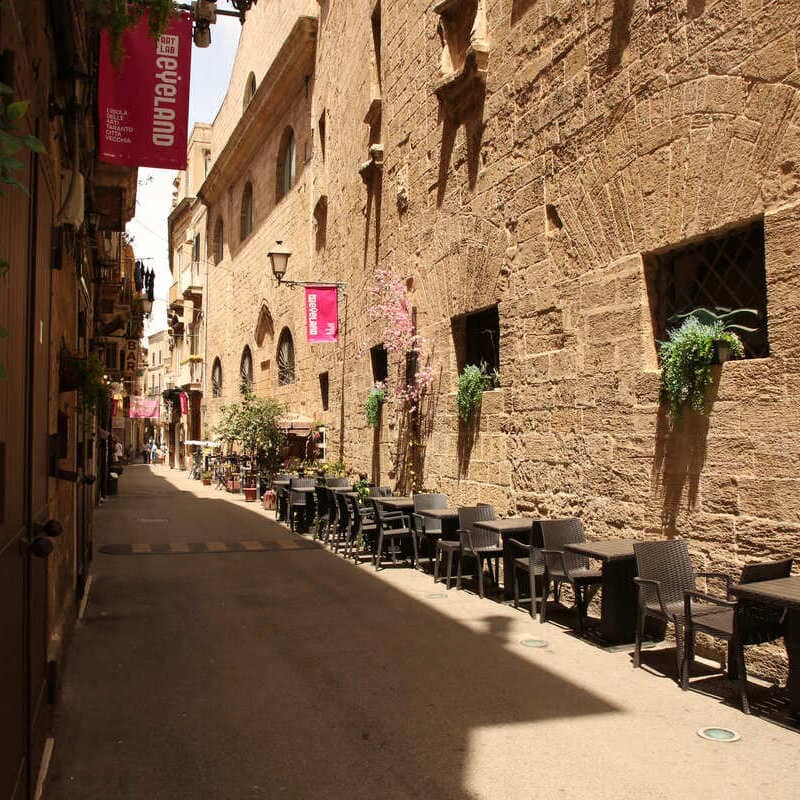
It’s Puglia, sure, except it lacks Polignano’s gloss. Not that that’s a bad thing. We like our cities to be a little rough around the edges.
Taranto’s Iconic Fortress On The Sea
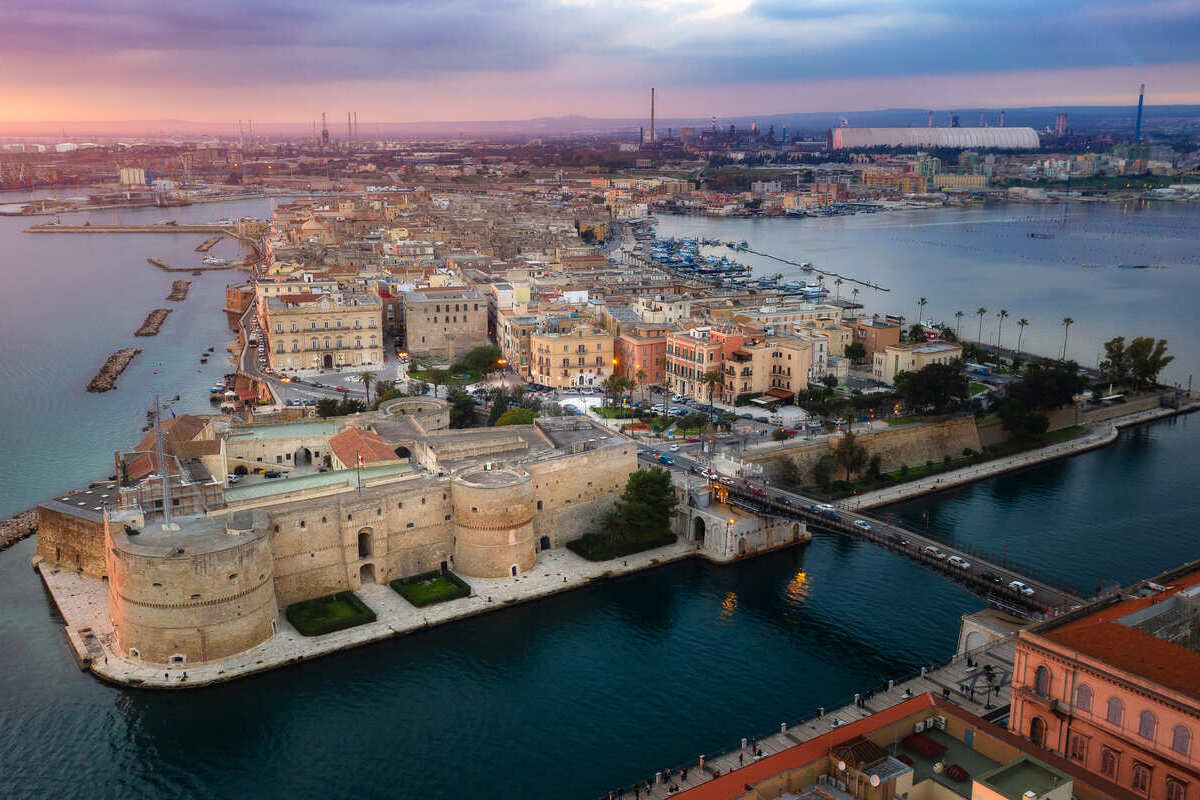
If there’s one structure that perfectly embodies the spirit of Taranto, it would be the massive Castello Aragonese guarding the harbor:
It has a layered history, with Greek and Roman foundations, medieval reinforcements, and Renaissance touch-ups, and it feels particularly epic at sunset, when the sun sets over the town, casting a soft, golden glow on its 15th-century walls.
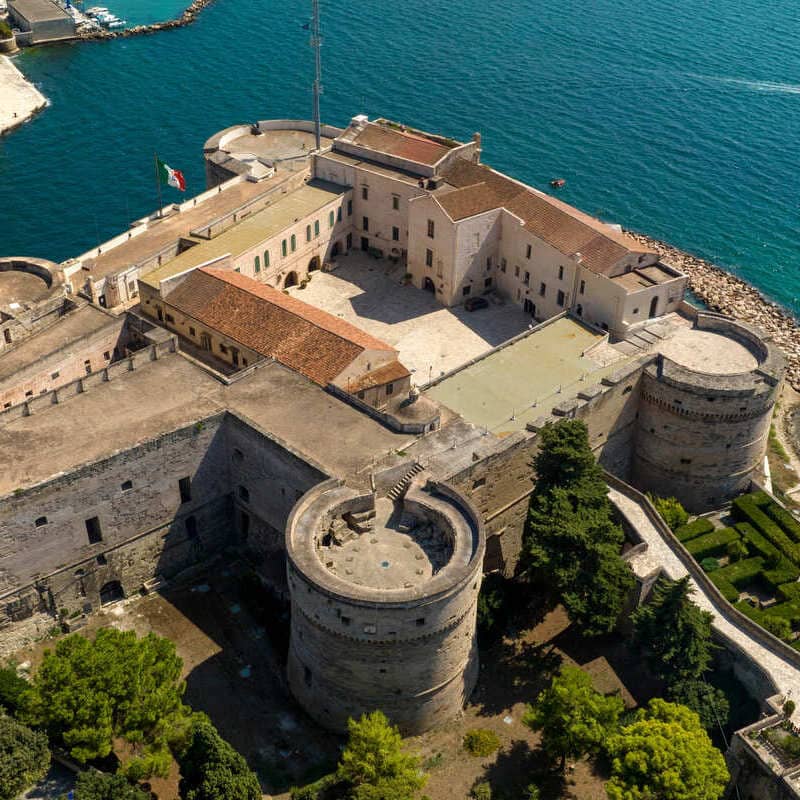
It’s not the Florence-or-Venice kind of beauty. You know, the one that slaps you hard in the face and leaves you disoriented for a few days trying to process it all. Taranto feels more like a gentle caress.
It comes and goes like the waves that crash against the castle’s battlements, and before you know, between a forkful of seafood linguini hither and thither, it’s sneaked up on you and you’ve fallen madly in love with the place.
Taranto Is One Of The Cheapest Cities In Italy
There’s more: Taranto is one of the most affordable destinations in all of Italy.

This is what the data shows us, but I didn’t even need the data to state the obvious: having been to 11 out of 20 administrative Italian regions by now, and up and down the boot, it’s up there with the undersung Agrigento and an equally-underrated Trieste in terms of budget-friendliness:
- Inexpensive meal (local eatery/ café): $15 per person
- Street food/ quick bite (sandwich, pizza slice): $5
- Capuccino/ coffee: $1.70
- Domestic beer (0.5L): $3
Some of my favorite eateries in town for a no-frills, casual meal, where locals go to themselves, include Trattoria da Zia Franca (for traditional, homecooked Puglian dishes like orecchiette), Gente di Mare (the top-spot for seafood), and Passione in Pasta (the name is self-explanatory).

Food may be cheap, but if you’re clever enough, you’re probably thinking at this point that accommodation prices are the big catch this time.
How Cheap Are Rooms?
Well, I’m sorry to disappoint you (or not, I guess?), but there’s no hidden price tags here: if you feel like booking a two-room apartment in a historic guesthouse right in the center of town, that will cost you $60 a night this spring.
Wanna stay in the actual heart of it all, within only a few steps of the major ancient sights, and still pay cheap? Due Delfini has rooms starting from $75 in mid-April.

Or maybe a modern, well-equipped loft with an external jacuzzi, within short driving distance of the Old City, is your cup of tea. Check out Cristina Home, at a ‘whopping’ overnight rate of $101.
If you’re used to Positano, Lake Como, Milan, Venice, and the like, Taranto will feel both like a much-needed breath of fresh air—there’s basically no one around!—and a sweet steal of a deal.
Before everyone else takes our recommendation and runs it on their own website like it’s their idea, just remember: you heard it here first.

The Travel Off Path Advantage: Your Travel Toolkit
Subscribe To Our Latest Posts
Enter your email address to subscribe to Travel Off Path’s latest breaking travel news, straight to your inbox.