

March 7: U.S. Embassies Issue Wave Of New Security Alerts For Travelers
The U.S. State Department issued seven updated security alerts on March 6-7, 2026, signaling shifting conditions across the Middle East. While some countries show early signs of recovery with airports reopening, others face escalating threats including new warnings about Americans being specifically targeted.
Here is what travelers need to know today March 7, 2026.

Because situations of this magnitude change by the minute, waiting for the evening news is not an option for proactive travelers. We have built the only tool on the internet that tracks U.S. embassy security alerts on a per-country basis, updating travel advisories in real-time.
You can check your destination’s live Embassy reports and safety status here
Israel: Flights Resume But Embassy Services Extended
U.S. Embassy Jerusalem announced that outbound commercial flights are expected to resume on March 8, offering the first organized departure option in days. However, the embassy simultaneously extended the suspension of routine consular services through March 13, a significant one-week extension from the original March 6 date.
The Taba border crossing into Egypt remains open 24 hours for those seeking overland departure. Americans still in the country should not rely on embassy assistance for the foreseeable future.
The current Traveler Real-Time Safety Index for Israel has reached it lowest score yet meaning American travelers DO NOT feel safe. The current score is at 26 as of publishing.
Israel’s Traveler Safety Index score plummeted to 26 from 75 before the conflict.

Qatar: Americans May Be Targeted
In one of the most alarming developments, U.S. Embassy Doha issued a warning that Iranian proxies may specifically target Americans in the country. Consular services are suspended and citizens are urged to depart immediately if it is safe to do so.
This represents an escalation from previous shelter-in-place advisories and suggests intelligence indicating deliberate threats against U.S. nationals.
Qatar’s Traveler Safety Index score plummeted from over 91 to 40.
Iran: Government May Block Departures
The security situation in Iran took a concerning turn with a new alert warning that the Iranian government may restrict departures. Previous advisories encouraged Americans to leave by land if safe. The new language suggests a narrowing window for exit.
U.S. citizens remaining in Iran face the possibility of being unable to leave. The State Department continues to advise against all travel to the country.
Iran’s Traveler Safety Index score has bottomed out at 18.
United Arab Emirates: Shelter-In-Place Now In Effect
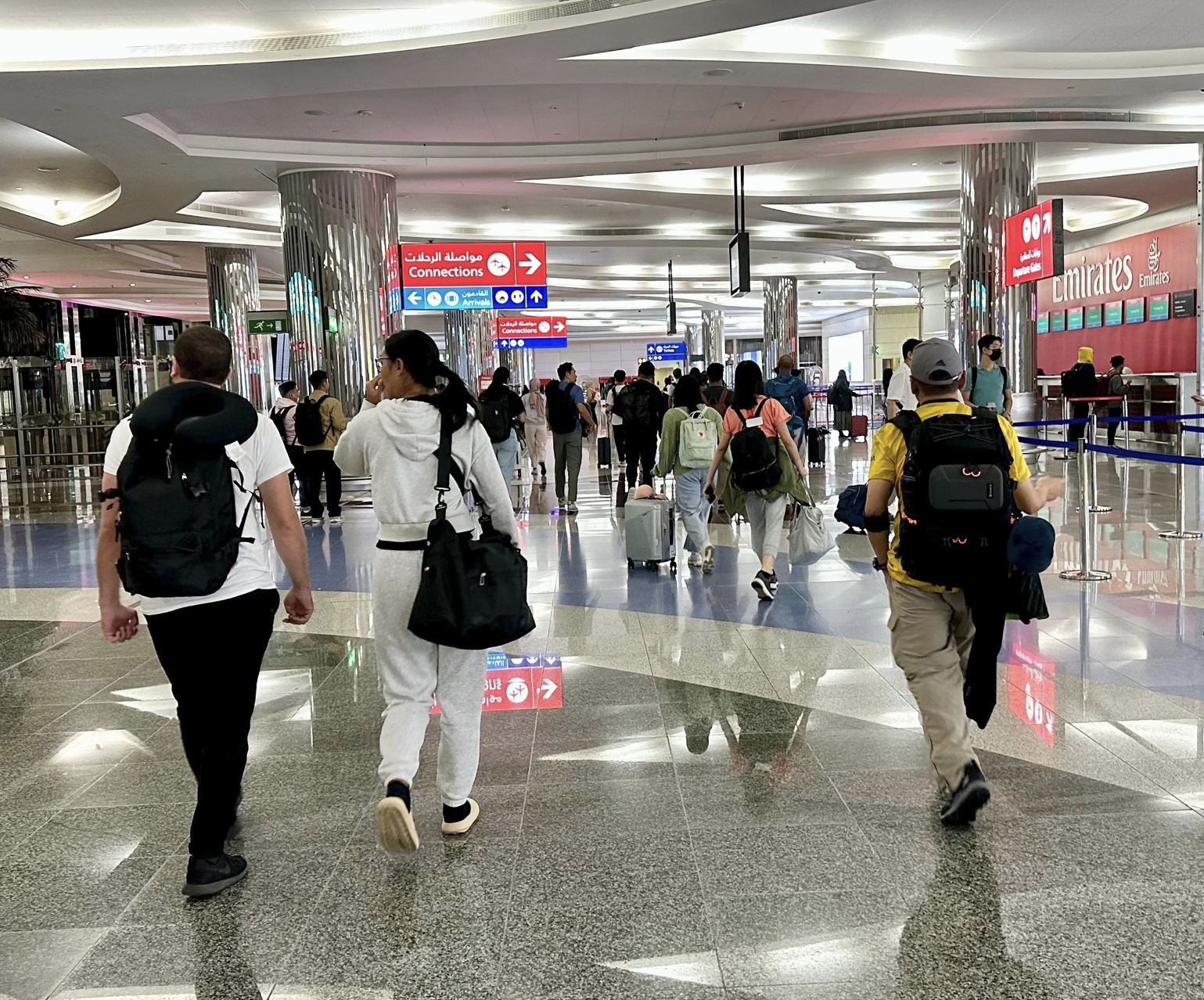
The UAE, previously under a “Reconsider Travel” advisory, has escalated to shelter-in-place status. Limited commercial flights are resuming from Dubai and Abu Dhabi, but land border crossings are experiencing significant congestion.
Americans attempting to depart overland should expect delays and plan accordingly with sufficient supplies.
Dubai’s Traveler Safety Index score has plummeted from 90 to 36.
Jordan: Airport Reopens
In positive news, Queen Alia International Airport in Amman has reopened with daily flights to limited destinations. Land borders are also operating, though travelers should anticipate possible delays.
This marks a significant improvement from previous days when the embassy advised sheltering in place due to missiles and drones in Jordanian airspace.
Lebanon: MEA Flights Available
Middle East Airlines has resumed flights from Beirut-Rafic Hariri International Airport, providing a commercial departure option for Americans seeking to leave Lebanon. The embassy is also offering limited passport services.
This partial restoration of services comes after days of complete closure and represents progress, though the overall security situation remains volatile.
Bahrain: No Flights, Land Route Open
Commercial flights are not currently operating from Bahrain International Airport. However, the King Fahd Causeway connecting Bahrain to Saudi Arabia remains open, offering an overland escape route.
Americans in Bahrain should consider departing via the causeway while the option remains available.
What This Means For Travelers
The seven alerts paint a picture of a region in flux. Jordan, Lebanon, and Israel show early signs of transportation recovery, while Qatar and Iran present escalating dangers. The UAE has moved backward with a new shelter-in-place order.
Travelers with upcoming plans to any of these countries should postpone indefinitely. Those currently in the region should take advantage of any available departure options immediately, as conditions can change without warning.
The State Department’s official travel advisories provide baseline risk assessments, but these real-time embassy security alerts reflect ground-level conditions that may not yet be captured in formal advisory level changes.
Americans abroad should enroll in the Smart Traveler Enrollment Program (STEP) to receive alerts directly and monitor embassy websites for their specific location.
You can view all the latest official Travel Advisories on the US State Department website.
You can check the most recent US Embassy alerts for your destination here.